

Manufacturing organizations often assume that hiring plant leadership is a straightforward process — identify candidates with strong technical experience, evaluate past performance, and move quickly to offer.
In reality, manufacturing plant leadership hiring is one of the most complex and high-impact decisions a company can make. Plant managers and operations leaders are responsible not only for production output but also for workforce stability, safety, quality, and cost control.
When hiring decisions miss the mark, the consequences ripple across the entire operation — from missed production targets to increased turnover and declining morale.
Despite the importance of these roles, many companies continue to rely on outdated hiring assumptions and incomplete evaluation criteria.
The Cost of Getting Plant Leadership Hiring Wrong
A misaligned plant leader can create long-term operational inefficiencies that are difficult to reverse.
Common consequences include:
- Declining productivity due to poor workflow management
- Increased employee turnover caused by ineffective leadership
- Safety incidents resulting from inconsistent enforcement of protocols
- Breakdown in communication between leadership and frontline teams
- Inability to adapt to changing production demands or supply chain disruptions
According to research highlighted by Harvard Business Review, leadership effectiveness has a direct correlation with operational performance and employee engagement — particularly in complex environments like manufacturing.
When hiring decisions are based on incomplete or outdated criteria, organizations risk placing leaders who are technically capable but operationally misaligned.
What Manufacturing Companies Consistently Get Wrong
Overvaluing Technical Expertise Over Leadership Capability
One of the most common mistakes in manufacturing plant leadership hiring is prioritizing technical knowledge over leadership effectiveness.
While technical experience is important, it does not guarantee the ability to lead teams, manage conflict, or drive continuous improvement.
Strong plant leaders must be able to:
- Communicate clearly across multiple levels of the organization
- Build trust with frontline employees
- Navigate workforce challenges and labor dynamics
- Lead through change and uncertainty
Organizations that overemphasize technical background often overlook candidates who excel in people leadership and operational strategy.
Failing to Define the Role Beyond the Job Description
Many companies approach hiring with a static job description that does not reflect the realities of the plant environment.
This leads to:
- Misaligned expectations between leadership and stakeholders
- Poor candidate fit
- Early turnover due to unclear performance expectations
Effective manufacturing plant leadership hiring requires a deeper understanding of:
- Current operational challenges
- Workforce dynamics and culture
- Long-term business goals
- Leadership gaps within the existing team
Without this clarity, even strong candidates may struggle to succeed.
Ignoring Cultural and Workforce Fit
Manufacturing environments are highly dependent on workforce cohesion and leadership credibility.
Hiring decisions that ignore cultural alignment often result in:
- Resistance from existing teams
- Low engagement and trust issues
- Increased turnover among skilled workers
Plant leaders must be able to integrate into the organization’s culture while also influencing positive change.
This balance is often overlooked during the hiring process.
Relying Too Heavily on Internal Promotion
Promoting from within can be valuable, but it is not always the best solution for leadership roles.
Common risks include:
- Promoting strong individual contributors into roles they are not prepared for
- Lack of fresh perspective or innovation
- Difficulty managing former peers
Internal candidates should be evaluated with the same rigor as external candidates, including leadership readiness and strategic capability.
Underestimating the Importance of Change Management
Modern manufacturing environments are constantly evolving due to automation, digital transformation, and supply chain complexity.
Plant leaders must be able to:
- Implement new systems and processes
- Lead teams through operational change
- Align workforce behavior with evolving goals
Companies that fail to assess change management capability often struggle during periods of transition.
A Better Approach to Manufacturing Plant Leadership Hiring
To improve outcomes, organizations need a structured and strategic approach to hiring plant leadership.
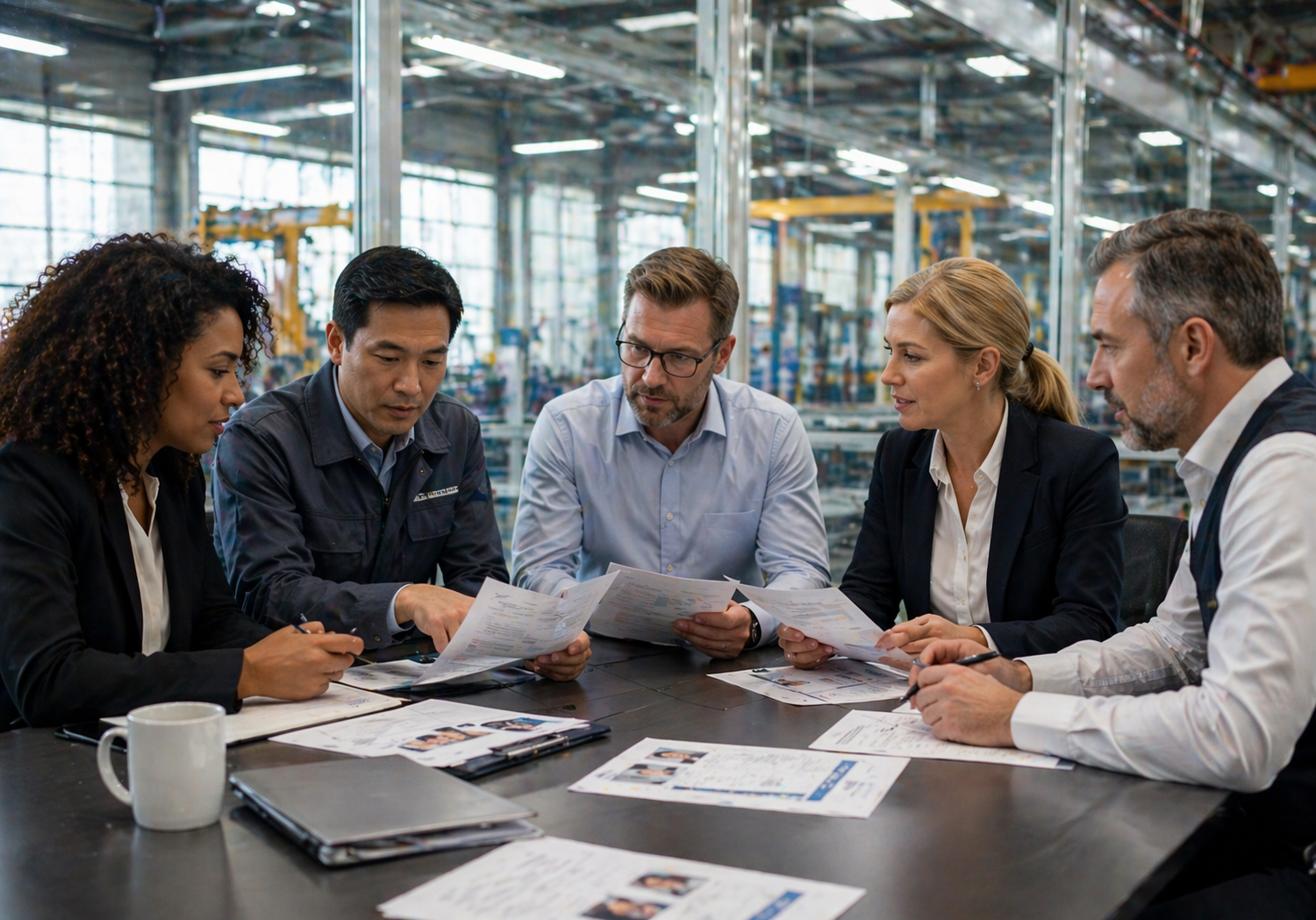
1. Define Success Before Starting the Search
Before evaluating candidates, clearly define what success looks like in the role.
This includes:
- Operational metrics (efficiency, output, quality)
- Leadership expectations (team engagement, communication)
- Strategic objectives (growth, expansion, transformation)
A well-defined success profile helps guide the entire hiring process.
2. Evaluate Leadership Competencies, Not Just Experience
Shift the focus from resume-based evaluation to competency-based assessment.
Key competencies include:
- People leadership and team development
- Problem-solving and decision-making
- Communication and influence
- Adaptability and resilience
Structured interviews and behavioral assessments can help identify these capabilities more effectively.
3. Incorporate Real-World Scenarios Into the Hiring Process
Traditional interviews often fail to capture how candidates perform in real situations.
Instead, use:
- Case studies based on actual plant challenges
- Scenario-based discussions
- Problem-solving exercises
This approach provides insight into how candidates think and lead under pressure.
4. Align Stakeholders Early in the Process
Plant leadership hiring often involves multiple stakeholders, including:
- Operations leadership
- HR teams
- Executive leadership
Misalignment between stakeholders can lead to inconsistent evaluation and delayed decisions.
Establish clear alignment on:
- Role expectations
- Evaluation criteria
- Decision-making process
This ensures a more efficient and consistent hiring experience.
5. Look Beyond Active Candidates
Many of the strongest manufacturing leaders are not actively seeking new roles.
A broader search approach allows organizations to access:
- Passive candidates with proven track records
- Leaders currently succeeding in similar environments
- Individuals with specialized expertise
Working with experienced partners, such as manufacturing executive recruiters, can help organizations access this talent pool more effectively.
The Role of Leadership in Operational Stability
Plant leaders serve as the bridge between strategy and execution.
Their responsibilities include:
- Translating business goals into operational plans
- Managing workforce performance and engagement
- Ensuring safety and compliance standards
- Driving continuous improvement initiatives
When leadership is aligned, operations run more smoothly and adapt more effectively to change.
When leadership is misaligned, even well-designed processes can fail.
Practical Framework for Improving Hiring Outcomes
Organizations can improve manufacturing plant leadership hiring by adopting a structured framework:
Step 1: Diagnose Current Challenges
Identify gaps in leadership, operations, and workforce performance.
Step 2: Define the Leadership Profile
Develop a clear profile that includes both technical and leadership competencies.
Step 3: Expand the Talent Pool
Look beyond traditional sourcing channels to access a broader range of candidates.
Step 4: Implement Structured Evaluation
Use consistent, competency-based evaluation methods.
Step 5: Support Onboarding and Integration
Ensure new leaders are set up for success through structured onboarding and clear expectations.
Why This Matters More Than Ever
Manufacturing is undergoing significant transformation driven by automation, data, and global competition.
According to McKinsey & Company, companies that effectively align leadership with operational strategy are more likely to achieve sustained performance improvements.
This makes manufacturing plant leadership hiring not just an HR function, but a critical business priority.
Organizations that invest in a more strategic hiring approach are better positioned to:
- Improve operational efficiency
- Strengthen workforce engagement
- Navigate industry changes
- Maintain long-term competitiveness
Closing Perspective
Hiring plant leadership is not simply about filling a role — it is about shaping the future of your operations.
Companies that rely on outdated hiring practices risk repeating the same challenges, while those that adopt a structured, strategic approach are more likely to build resilient and high-performing teams.
Organizations facing ongoing hiring or leadership challenges often benefit from working with experienced search and recruiting partners who understand the complexities of manufacturing leadership.