
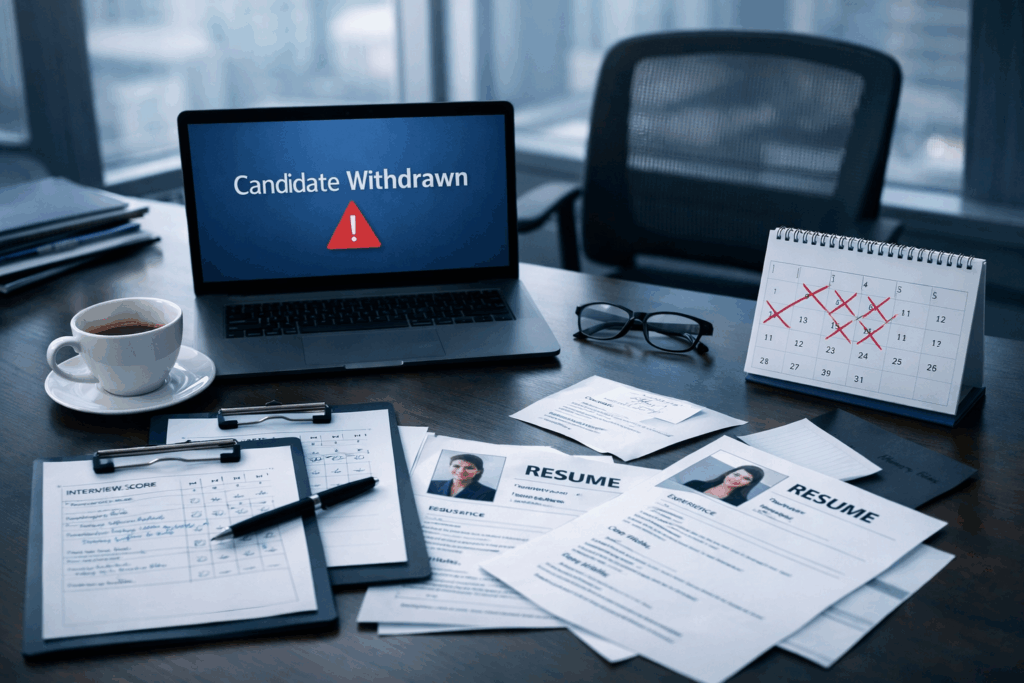
You find strong candidates. They pass screenings, perform well in interviews, and show clear interest. Then they disappear. The offer never goes out, the role stays open, and the hiring process starts over.
Candidate drop-off during hiring isn’t random. It follows predictable patterns—and in most cases, it’s preventable. When qualified candidates exit mid-process, it usually signals a breakdown in the hiring experience rather than a lack of commitment.
Top talent has choices. They assess employers carefully and decide where their time and energy are best spent. If your process feels slow, unclear, or disorganized, they will move on to opportunities that feel easier and more respectful.
Understanding why candidates disengage—and how to keep them engaged—is essential for organizations hiring in competitive markets.
The Real Cost of Mid-Process Drop-Off
When candidates withdraw halfway through hiring, the impact goes far beyond restarting the search.
Recruiters lose productivity. Each withdrawal represents hours spent sourcing, screening, coordinating interviews, and managing stakeholders that can’t be recovered.
Hiring managers become frustrated. Repeated drop-offs reduce confidence in the recruiting process and slow decision-making across teams.
Employer brand suffers. Candidates who withdraw still share their experiences with peers or online. A poor candidate experience spreads quickly.
Decision quality declines under pressure. As roles remain open, urgency increases. Teams may rush hires or lower standards just to fill positions, leading to performance or retention issues later.
Research from SHRM consistently shows that negative interview experiences cause candidates to abandon roles they initially wanted. Positive experiences, on the other hand, keep candidates engaged even when delays or complications occur.
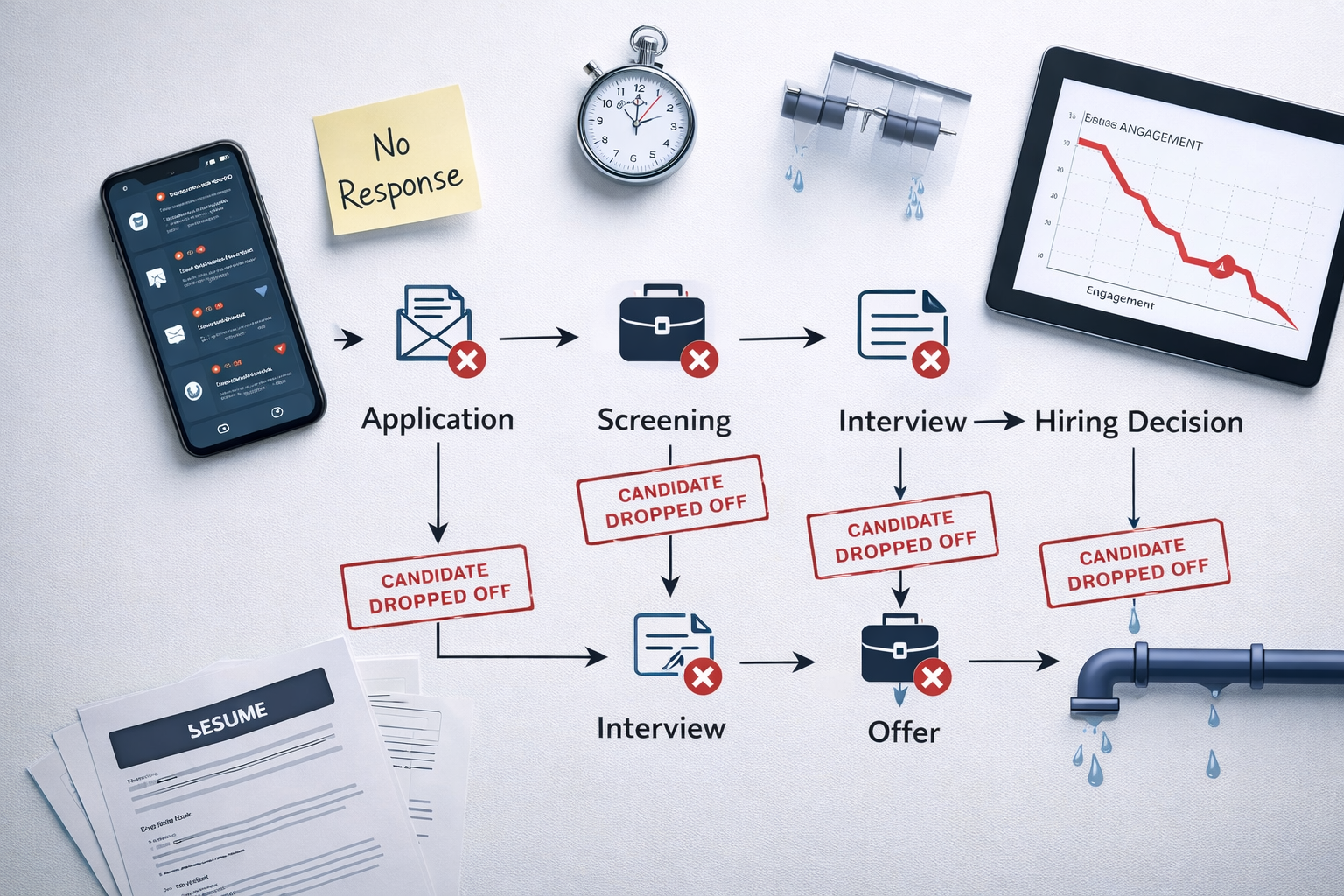
Why Strong Candidates Withdraw
Most candidate withdrawals stem from a few common failure points.
Communication Gaps
Silence is the most frequent reason candidates disengage. After investing time in applications or interviews, not hearing back signals disorganization or lack of interest.
Even when there’s no update, acknowledging candidates and setting expectations keeps them engaged. A short message confirming status is far more effective than radio silence.
Long or Overcomplicated Hiring Processes
Extended hiring timelines increase drop-off risk. Each additional interview stage gives candidates more time to pursue and accept competing offers.
The issue worsens when candidates don’t understand why each step exists. Without clarity, extra rounds feel inefficient rather than thorough—especially for non-executive roles.
Top performers move fast. Slow processes push them toward employers who make decisions quickly. Understanding how to reduce time-to-hire without lowering candidate quality can significantly reduce drop-off rates.
Unclear or Shifting Role Expectations
Trust breaks down when the role changes mid-process. If responsibilities, reporting lines, or compensation differ from what was originally discussed, candidates question whether the organization truly knows what it needs.
This often reflects internal misalignment before the role was opened. When stakeholders aren’t aligned, candidates absorb the confusion—and many choose to exit. Crafting clear job descriptions that attract the right candidates from the start helps prevent this misalignment.
Poor Interview Experiences
Candidates judge organizations based on how interviews are conducted. Common experience killers include unprepared interviewers, repetitive questions, aggressive or dismissive behavior, and distracted interviewers.
A single negative interaction can outweigh several positive ones. Candidates assume interview behavior reflects management style and company culture. Avoiding common screening mistakes that prevent you from hiring qualified candidates is crucial to maintaining candidate engagement.
Late Compensation Misalignment
Discussing compensation too late wastes time and damages trust. When candidates reach final stages only to discover pay is well below expectations or market rates, they leave frustrated.
Early transparency—even sharing ranges—prevents late-stage fallout. Delaying these conversations rarely benefits employers, especially when hiring experienced professionals.
Competing Offers
Sometimes candidates leave because they receive stronger offers elsewhere—better compensation, faster decisions, clearer growth paths, or simply a better experience.
While you can’t always outbid competitors, you can control speed, clarity, and candidate experience.
Early Warning Signs of Candidate Disengagement
Candidates rarely withdraw without warning. Common signals include slower response times, reduced enthusiasm, limited interview availability, and questions focused on timelines rather than the role itself.
When these signs appear, proactive outreach—checking in, clarifying next steps, and reaffirming interest—can prevent withdrawal.
How to Keep Candidates Engaged Throughout Hiring
Reducing drop-off requires intentional design of the candidate experience.
Set Expectations Early
At the start of the process, clearly outline the number of interview stages, expected timelines, decision-makers involved, and when candidates will hear back after each step. Transparency builds trust, even when timelines shift.
Maintain Consistent Communication
Establish clear communication standards. Acknowledge applications promptly, provide timely post-interview updates, send regular check-ins to active candidates, and communicate delays immediately.
Automation can help, but personalization matters—especially for later-stage candidates.
Streamline the Interview Process
Evaluate each interview stage critically. If it doesn’t provide unique, necessary information, remove it.
Combining interviews into panels, using focused skills assessments, empowering faster decisions, and starting reference checks earlier can significantly shorten timelines without sacrificing quality.
Prepare Interviewers
Every interviewer influences candidate perception. Interviewers should review candidate materials in advance, understand what they’re evaluating, avoid redundancy, and be ready to answer questions about the role and team.
Even basic preparation dramatically improves interview quality and candidate confidence. Implementing proven interview techniques that help uncover true potential ensures more meaningful conversations with candidates.
Sell the Opportunity Authentically
Hiring is a two-way evaluation. Candidates need to understand why your role is worth choosing.
Share specific details about projects, team dynamics, growth opportunities, mission impact, and culture. Concrete examples help candidates envision themselves succeeding in the role.
Address Concerns Openly
Encourage honest dialogue by asking candidates what matters most in their decision and what concerns they may have. When issues arise, address them transparently. Credibility strengthens engagement.
Create Positive Candidate Moments
Small gestures make a big difference. Personalized follow-ups, thoughtful answers after interviews, informal conversations with future teammates, and genuine expressions of interest help candidates feel valued.

When a Strong Candidate Starts Pulling Away
If disengagement becomes noticeable, address it directly. A respectful conversation often uncovers solvable issues such as timeline concerns or competing offers.
If delays are unavoidable, explain what’s happening and commit to clear next steps. Candidates tolerate delays when they understand them.
For exceptional candidates, consider accelerating decisions. Rigid processes often cause organizations to lose top talent unnecessarily.
Building a Candidate-Centric Hiring Culture
Preventing drop-off requires more than isolated fixes. Track where candidates exit the process, collect feedback from those who withdraw, and train hiring teams on candidate experience best practices.
Assign clear ownership for candidate experience. Without accountability, improvements rarely stick.
Turning Candidate Drop-Off Into Advantage
Organizations that prioritize candidate engagement hire faster, secure stronger talent, and build employer brands that compound over time.
Clear communication, efficient processes, prepared interviewers, and respect for candidate time are not revolutionary ideas—but executing them consistently separates organizations that lose talent mid-process from those that win it.
Facing Persistent Challenges With Candidate Drop-Off?
Organizations facing ongoing candidate drop-off or hiring delays often benefit from taking a closer look at how their hiring processes impact candidate engagement. Exploring proven hiring frameworks and external perspectives can help identify where friction occurs and how to create a more consistent, candidate-centered experience. Speaking with an experienced recruiting partner can also provide valuable insight into what’s working in today’s competitive talent market.