
The qualified candidates have stopped coming. Your once-reliable sourcing channels are delivering fewer resumes, and the profiles you do receive don’t match your needs. If this sounds familiar, you’re experiencing what many organizations face: a dried-up talent pipeline.
This isn’t just an inconvenience. When your pipeline runs dry, hiring timelines extend, critical roles remain unfilled, and business objectives stall. The cost of an empty pipeline compounds quickly—lost productivity, increased workload on existing staff, and delayed growth initiatives.
The good news is that a depleted talent pipeline is fixable. It requires a combination of honest diagnosis, strategic shifts, and consistent execution. This guide walks through practical steps to rebuild your candidate flow and create a more resilient recruiting system.
Understanding Why Talent Pipelines Fail
Before rushing to solutions, you need to understand what caused the breakdown. Talent pipelines don’t dry up overnight, and the root causes often differ from what leaders initially assume.
Common Pipeline Killers
Market saturation. Your industry may be competing for the same limited pool of specialized candidates. When every company pursues identical profiles through identical channels, differentiation becomes impossible.
Employer brand erosion. Your company’s reputation among job seekers directly impacts candidate flow. Negative reviews, public layoffs, or leadership controversies can make qualified candidates hesitate or avoid your openings entirely.
Outdated sourcing methods. The platforms and tactics that worked three years ago may no longer reach your target talent. Candidate behavior evolves, and sourcing strategies must evolve with it.
Poor candidate experience. If your application process is cumbersome, communication is inconsistent, or feedback is non-existent, candidates will drop out and warn others. Word spreads quickly in professional networks.
Unrealistic requirements. Job descriptions loaded with unnecessary qualifications, inflated experience requirements, or unrealistic salary ranges will filter out strong candidates before they ever apply.
According to research from the Society for Human Resource Management, the average cost per hire has reached $4,700, with time-to-fill averaging 42 days. When pipelines dry up, both metrics deteriorate rapidly.
Audit Your Current Recruiting Infrastructure
Start with a comprehensive assessment of your existing recruiting function. This audit should be brutally honest and data-driven.
Key Areas to Examine
Review your application data from the past six to twelve months. Track these metrics:
- Number of applications per open role
- Source of applications (job boards, referrals, social media, etc.)
- Conversion rates at each stage of your funnel
- Time from application to first contact
- Candidate drop-off points
- Offer acceptance rates
Interview your recruiting team and hiring managers. Ask specific questions: Which roles are hardest to fill? Where do qualified candidates decline to move forward? What feedback do rejected candidates provide? What objections arise during offer negotiations?
Examine your job descriptions and requirements. Remove credential inflation and focus on actual job performance needs. A Harvard Business School study found that many employers require bachelor’s degrees for positions that historically didn’t need them, unnecessarily shrinking their talent pools by millions of workers.
Check your employer review sites. Read Glassdoor, Indeed, and industry-specific platforms. Look for patterns in negative feedback, particularly around interview processes, management quality, and work culture. Poor screening practices can also contribute to inconsistent candidate experiences—avoiding common screening mistakes helps ensure your process evaluates candidates fairly and accurately from the start.
Diversify Your Sourcing Channels
Relying on one or two recruiting methods creates vulnerability. When those channels underperform, your entire pipeline suffers.
Expanding Your Reach
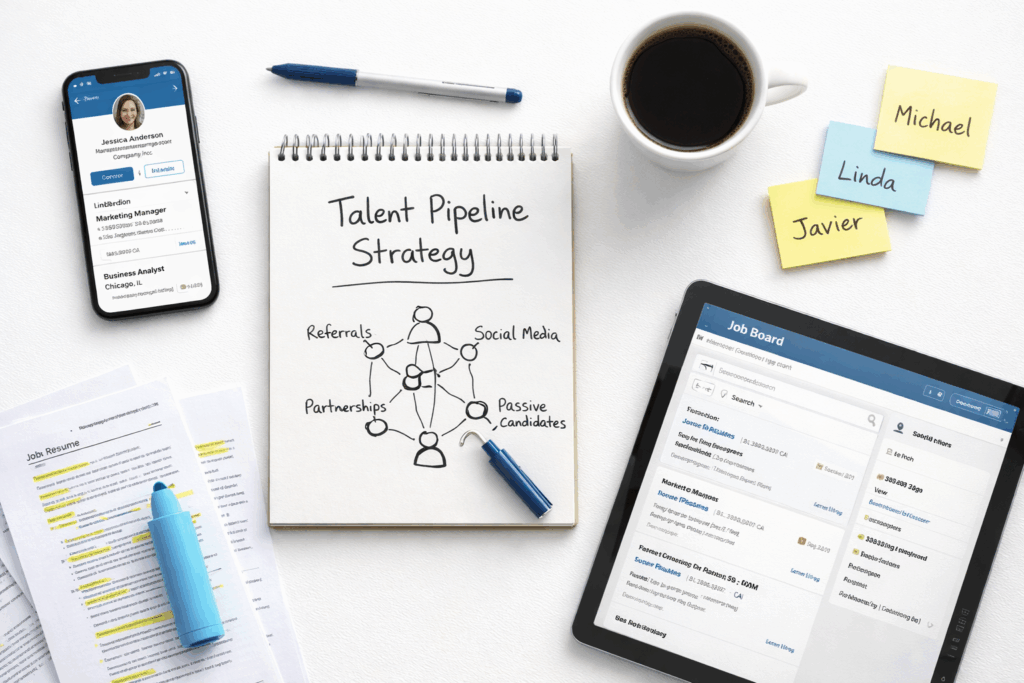
Passive candidate outreach. Most qualified professionals aren’t actively job searching. Proactive outreach through LinkedIn, industry forums, and professional associations can access this hidden talent pool. This requires dedicated time and personalized messaging—mass templates don’t work.
Employee referral optimization. Referral programs often exist on paper but underperform in practice. Strengthen yours by offering meaningful incentives, making the referral process simple, and providing regular updates to employees who refer candidates. Referred candidates typically have higher retention rates and faster onboarding times.
Industry partnerships. Build relationships with universities, bootcamps, professional associations, and industry groups. These partnerships create sustained candidate flow rather than transactional recruiting.
Talent communities. Create ongoing relationships with candidates who aren’t ready to join now but might be in the future. Regular newsletters, industry insights, and networking events keep your organization top-of-mind. When these professionals do decide to make a move, you’ll be their first call.
Boomerang programs. Former employees who left on good terms already understand your culture and business. A structured alumni network can bring back proven talent with minimal onboarding requirements.
Rebuild Your Employer Value Proposition
Candidates need compelling reasons to choose your organization over competitors. Your employer value proposition (EVP) articulates why talented people should want to work for you.
Crafting an Authentic EVP
Start by identifying what genuinely differentiates your workplace. Don’t list generic benefits every company offers. Instead, focus on specific aspects of your culture, mission, growth opportunities, or work environment that set you apart.
Gather input from current employees, particularly high performers and recent hires. What attracted them to your organization? What keeps them engaged? What would they tell a friend considering a role here?
Your EVP should address what matters most to your target candidates. For technical talent, this might emphasize challenging projects and continuous learning. For sales professionals, it could highlight earning potential and career advancement. For mission-driven candidates, it should showcase your organization’s impact and values.
Test your EVP with real candidates. If it doesn’t resonate during interviews or generate enthusiasm, refine it further. An effective EVP feels authentic and specific, not manufactured or generic.
Accelerate and Improve Your Hiring Process
Slow, cumbersome hiring processes lose qualified candidates to faster competitors. Every unnecessary step or delay gives candidates time to accept other offers or lose interest.
Process Optimization Strategies
Map your current hiring workflow from application to offer acceptance. Identify bottlenecks, redundant steps, and delays. Common problem areas include:
- Application systems that take more than ten minutes to complete
- Excessive interview rounds that don’t add decision-making value
- Long gaps between interview stages
- Slow internal approval processes for offers
- Poor coordination among interviewers
Set clear timelines for each stage and hold your team accountable. Respond to applications within 48 hours. Schedule next-round interviews before candidates leave the building. Make offer decisions within 24 hours of final interviews for competitive candidates. Organizations that reduce time-to-hire while maintaining quality standards gain significant competitive advantages in securing top talent.
Improve interviewer training. Many managers lack the skills to conduct effective interviews, leading to inconsistent candidate experiences and poor hiring decisions. Structured interview training improves both candidate assessment and the impression your organization makes.
Communicate consistently throughout the process. Even when you have no update, acknowledging where candidates stand builds goodwill. Silence creates anxiety and prompts candidates to pursue other opportunities more aggressively.

Develop Internal Talent Pipelines
External hiring shouldn’t be your only strategy for filling key roles. Internal development creates ready-now talent while improving retention and engagement.
Building from Within
Implement succession planning for critical positions. Identify high-potential employees who could grow into key roles with proper development. Create individualized development plans with clear milestones and support systems.
Offer stretch assignments that prepare employees for advancement. Temporary project leadership, cross-functional initiatives, and special assignments build capabilities while testing readiness for promotion.
Create clear career pathways that show employees how to advance. Many organizations lose talent simply because people don’t see growth opportunities. Transparent progression frameworks help employees visualize their futures with your company.
Invest in leadership development programs. Organizations that develop strong leaders internally create competitive advantages that external recruiting alone can’t match. These programs also signal to employees that you’re invested in their growth.
Partner with Specialized Recruiting Expertise
Some talent shortages require external expertise to solve. When your internal team lacks the bandwidth, market access, or specialized knowledge to fill critical roles, strategic partnerships can accelerate results.
Specialized recruiting partners bring established networks, market intelligence, and proven processes for accessing hard-to-reach candidates. They can often engage passive candidates who wouldn’t respond to direct employer outreach and provide honest market feedback about your positioning and competitiveness.
For executive searches, niche technical roles, or geographic expansions, experienced recruiting partners can mean the difference between months of frustration and swift placement of qualified candidates. The key is choosing partners who invest time understanding your business, culture, and specific needs rather than simply pushing available resumes.
Measure, Adjust, and Sustain
Rebuilding your talent pipeline isn’t a one-time project. It requires ongoing attention, measurement, and refinement.
Creating Sustainability
Establish recruiting metrics that matter. Beyond basic application counts, track quality indicators: candidate-to-interview ratios, offer acceptance rates, time-to-productivity for new hires, and hiring manager satisfaction scores.
Conduct regular pipeline reviews. Monthly or quarterly assessments help you spot problems early and adjust before pipelines dry up again. These reviews should examine both quantity and quality of candidate flow.
Stay connected to market dynamics. Compensation trends, competitor moves, and economic shifts all impact talent availability. Regular market intelligence helps you adapt your strategies proactively rather than reactively. Research from McKinsey & Company demonstrates that organizations with continuous talent intelligence systems respond more effectively to market changes and maintain stronger talent pipelines.
Invest consistently in your recruiting function. Many organizations slash recruiting resources during slow periods, then struggle when growth resumes. Treating recruiting as a core business function rather than a variable expense creates more consistent results.
Build relationships before you need them. The best time to connect with potential candidates is before you have an opening. Networking, thought leadership, and community engagement create goodwill that translates to candidate interest when opportunities arise.
Need Help Rebuilding Your Talent Pipeline?
When candidate flow slows or key roles remain difficult to fill, it can be useful to step back and reassess how talent is being sourced and engaged. Some organizations choose to work with specialized recruiting partners to gain broader market visibility and reach qualified candidates who may not respond to traditional hiring methods. HR Personnel Services supports companies across industries by helping refine talent acquisition strategies and improve long-term pipeline stability.